Caring For Our Elderly – A Spiritual Responsibility
Looking after the elderly holds a place of deep importance in Islam, as emphasized throughout the Qur’an, where care, respect, and compassion for older members of society are presented as moral obligations. The Qur’anic perspective views aging as a stage of life deserving honor and protection, reminding believers that strength and independence are temporary, while kindness and responsibility endure. Caring for the elderly is therefore not only a social duty but a spiritual act rooted in gratitude and justice.
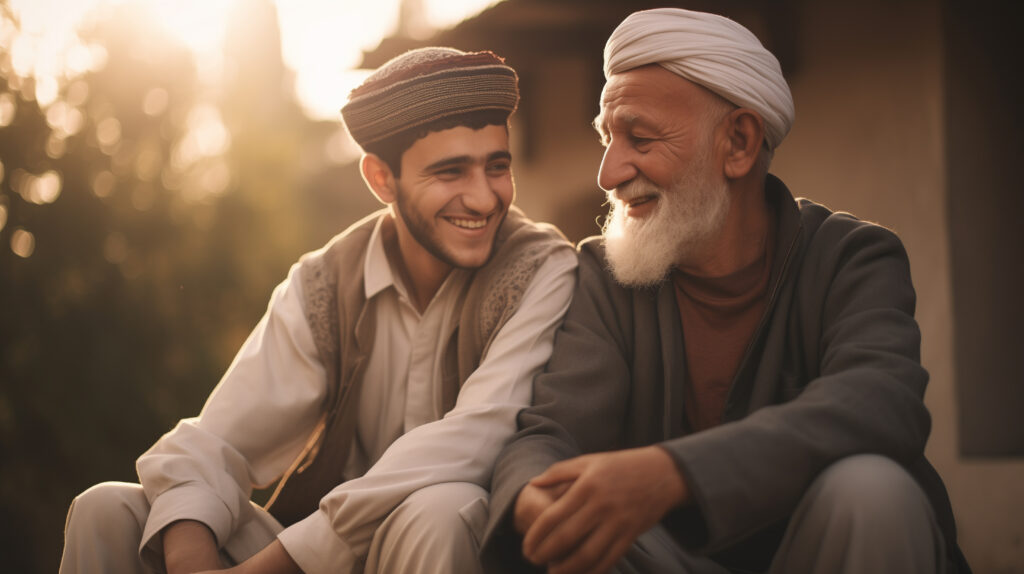
One of the clearest Qur’anic teachings on caring for the elderly appears in the command to show excellence toward parents, particularly as they reach old age. The Qur’an states: “Your Lord has decreed that you worship none but Him, and that you show kindness to parents. If one or both of them reach old age with you, do not say to them even a word of irritation, nor repel them, but speak to them a noble word” (Qur’an 17:23). This verse places care for aging parents immediately after worship of God, highlighting its profound importance. It emphasizes patience, gentle speech, and emotional sensitivity, recognizing the vulnerability that often accompanies old age.
The Qur’an further instructs believers to approach the elderly with humility and mercy: “Lower to them the wing of humility out of mercy and say, ‘My Lord, have mercy upon them as they raised me when I was small’” (Qur’an 17:24). This supplication reinforces a sense of gratitude and reciprocal care, reminding individuals that the elderly once provided care and protection during childhood. Looking after them becomes an act of acknowledgment and moral responsibility.
Beyond the family unit, the Qur’an promotes a broader ethic of compassion toward all who are vulnerable, including the elderly. Righteousness is described as caring for relatives, the needy, and those requiring support (Qur’an 2:177). This inclusive vision establishes that social responsibility extends to all members of society who may need assistance, not only immediate family. Older people, who may face physical weakness or social isolation, fall naturally within this Qur’anic concern for human dignity.
The Qur’an also highlights aging as part of the divine design, reminding people of their own eventual dependence. It states that God is the One who creates human beings in weakness, then grants strength, and later returns them to weakness and gray hair (Qur’an 30:54). This reflection encourages empathy, as caring for the elderly becomes a reminder of one’s own future and a call to humility. Recognizing the cycle of life helps cultivate patience and compassion toward those in later stages of life.
Justice and kindness are recurring Qur’anic values that shape how the elderly should be treated. Believers are commanded to stand for justice and act with goodness toward others (Qur’an 16:90). Neglect, mistreatment, or abandonment of the elderly contradicts this ethical framework. Instead, the Qur’an encourages conduct that preserves dignity, honors experience, and supports those who may no longer be able to support themselves fully.
In conclusion, the Qur’an places great emphasis on looking after the elderly as an essential moral and spiritual responsibility. Through kindness to aging parents, compassion for the vulnerable, and recognition of life’s natural stages, caring for the elderly becomes a reflection of faith in action. By upholding dignity, patience, and mercy, believers contribute to a society that honors its elders and upholds the Qur’anic principles of justice and compassion.
What could we improve?
Thanks! What would you like to read more about?
Thanks for your feedback!
You've already given feedback on this article — thank you!