
The Status of Women
The Qur’an presents women as full moral, spiritual, and social agents, endowed with dignity, responsibility, and rights equal in value to those of men. From its earliest revelations, the Qur’an challenged pre-Islamic norms that marginalized women and established principles that affirmed their humanity, moral worth, and essential role in society. The status of women in Islam, as articulated in the Qur’an, is grounded in justice, mutual responsibility, and spiritual equality.
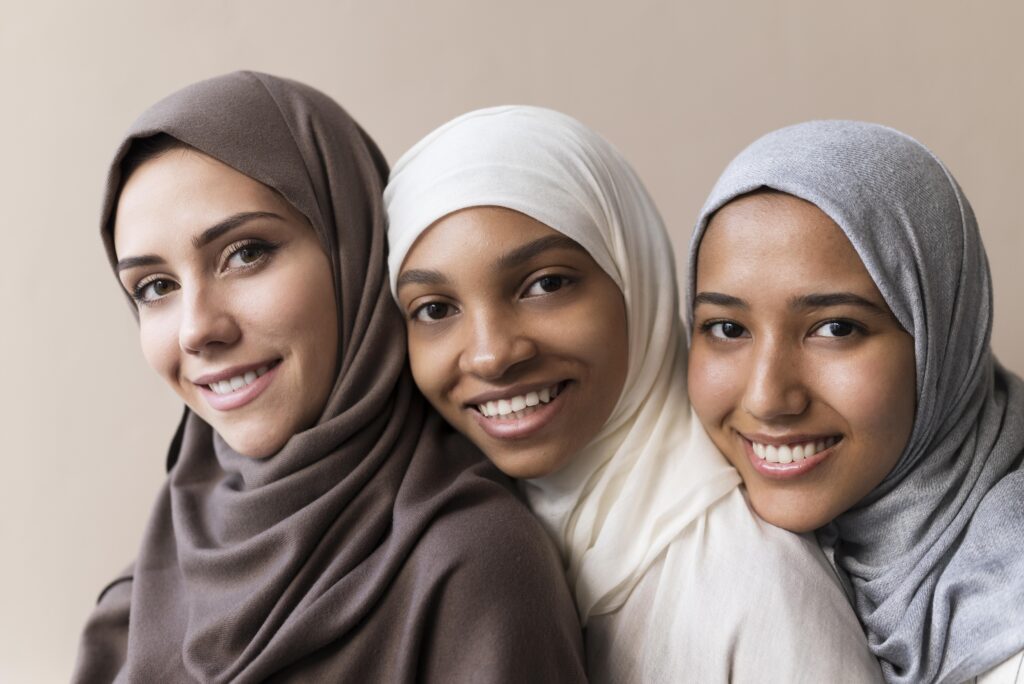
At the foundation of this vision is the Qur’anic assertion that all human beings share a single origin. “O mankind, fear your Lord, who created you from a single soul, and from it created its mate” (Qur’an 4:1). This verse emphasizes the shared essence of men and women, rejecting notions of inherent superiority based on gender. Human honor, according to the Qur’an, is not determined by sex, but by moral consciousness: “Indeed, the most noble of you in the sight of God is the most righteous of you” (Qur’an 49:13).
Spiritual equality between women and men is a recurring Qur’anic theme. The Qur’an repeatedly affirms that moral responsibility and reward apply equally to both. One of the clearest examples states: “Indeed, the Muslim men and Muslim women, the believing men and believing women… God has prepared for them forgiveness and a great reward” (Qur’an 33:35). Similarly, the Qur’an declares that whoever does good deeds, “whether male or female, while being a believer, We will grant them a good life” (Qur’an 16:97). These verses establish that women possess independent spiritual agency and are equally accountable before God.
The Qur’an also affirms women’s legal and economic rights. At a time when women were often denied inheritance, the Qur’an explicitly granted them a defined share: “For men is a share of what parents and close relatives leave, and for women is a share” (Qur’an 4:7). This recognition affirms women’s financial autonomy and legal identity. The Qur’an further instructs that marital relationships be founded on kindness and justice, commanding: “Live with them in kindness” (Qur’an 4:19).
In family and social life, the Qur’an presents marriage as a relationship of mutual comfort and mercy rather than domination. “Among His signs is that He created for you spouses from among yourselves that you may find tranquility in them, and He placed between you affection and mercy” (Qur’an 30:21). This portrayal emphasizes emotional partnership and respect. The Qur’an also describes believing men and women as mutual allies who support what is right and restrain what is wrong (Qur’an 9:71), highlighting shared responsibility in building an ethical society.
The Qur’an’s guidance on modesty further reflects balance and mutual accountability, addressing both men and women and emphasizing moral conduct over objectification (Qur’an 24:30–31). This reinforces the principle that dignity applies equally to all.
In conclusion, the Qur’an establishes the important status of women through principles of shared humanity, spiritual equality, legal rights, and mutual responsibility. Far from marginalizing women, the Qur’an affirms their essential role in faith, family, and society, grounding their status in justice, dignity, and moral worth.
What could we improve?
Thanks! What would you like to read more about?
Thanks for your feedback!
You've already given feedback on this article — thank you!